

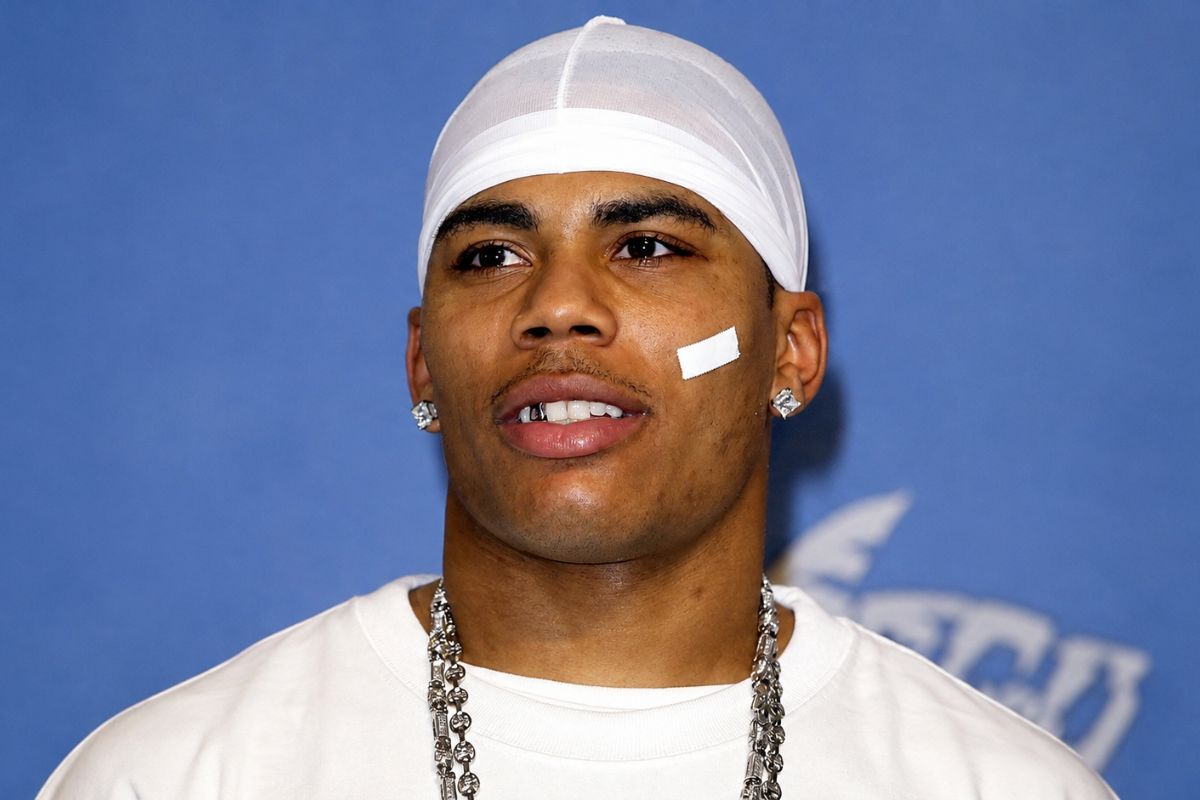
For fans of early-2000s hip-hop, few celebrity accessories were as recognizable as the white Band-Aid worn beneath Nelly’s eye. The St. Louis rapper turned a simple piece of medical tape into a signature part of his appearance during the height of his career. However, the story behind it was far more meaningful than a fashion trend. Nelly originally used the Band-Aid after suffering a facial injury while playing basketball, but he continued wearing it for another deeply personal reason. The accessory became associated with his support for City Spud, his half-brother, collaborator, and fellow member of the St. Lunatics, during City Spud’s incarceration. As Nelly’s music reached millions of listeners, the distinctive look became part of his public identity and an unforgettable symbol of early-2000s rap culture.
Quick Facts About Nelly
| Fact | Details |
|---|---|
| Full Name | Cornell Iral Haynes Jr. |
| Stage Name | Nelly |
| Born | November 2, 1974 |
| Birthplace | Austin, Texas, United States |
| Raised In | St. Louis, Missouri |
| Profession | Rapper, singer, actor, entrepreneur |
| Music Group | St. Lunatics |
| Debut Album | Country Grammar |
| Famous Accessory | White Band-Aid beneath the eye |
| Notable Collaborator | City Spud |
| Major Era | Late 1990s–2000s and beyond |
| Best-Known Hits | “Hot in Herre,” “Dilemma,” “Ride Wit Me” |
Nelly became one of the biggest names in popular music after emerging from St. Louis with a style that blended hip-hop, pop, country influences, and Southern-inspired sounds. His debut album Country Grammar transformed him from a regional artist into an international star, while his distinctive fashion helped make him instantly recognizable.
Among all the elements associated with his image, the small Band-Aid under his eye remains one of the most memorable. Many people assumed it was simply a quirky fashion choice, but there was a personal story behind it.
The accessory initially came from a basketball injury. Nelly later continued wearing it as a tribute to City Spud, a close family member and St. Lunatics collaborator who was serving a prison sentence. Over time, the look became part of Nelly’s identity and even influenced fans and fashion during the early 2000s.
Early Life and Background
Nelly was born Cornell Iral Haynes Jr. on November 2, 1974, in Austin, Texas. His family later moved to St. Louis, Missouri, where he spent much of his youth and developed the cultural influences that would eventually shape his music career.
St. Louis became an important part of Nelly’s identity. Rather than hiding his regional background, he embraced it throughout his music, lyrics, fashion, and public image.
During his teenage years, Nelly developed an interest in music and sports. Baseball and basketball were particularly important parts of his life, and that connection to athletics later played an unexpected role in the story behind his famous facial accessory.
Nelly eventually became associated with the St. Lunatics, a hip-hop group formed with other artists from the St. Louis area. The collective included members such as Ali, Murphy Lee, Kyjuan, and City Spud.
The group built a local following before Nelly began establishing himself as a solo performer. That early connection remained important throughout his career.
How the Famous Band-Aid Started
The story began with something surprisingly ordinary: a basketball injury.
Nelly has explained that he suffered a cut on his face while playing basketball. He used a Band-Aid to cover the injury, giving the accessory an entirely practical purpose at first.
There was no grand fashion plan behind the original decision. It was simply a way to cover an injury.
However, the small piece of adhesive eventually took on a much deeper meaning.
Around the period when Nelly’s music career was becoming increasingly successful, City Spud was incarcerated. Because of their close relationship, Nelly continued wearing the Band-Aid as a visible reminder of his absent brother and collaborator.
What started as a temporary solution therefore became a lasting symbol.
The Connection to City Spud
City Spud, whose real name is Lavell Webb, was an important member of the St. Lunatics and someone Nelly considered family.
His incarceration occurred during a crucial period in Nelly’s rise to fame. While Nelly was becoming a major recording artist, City Spud was unable to participate freely in the group’s growing success.
For Nelly, continuing to wear the Band-Aid was a way to keep that connection visible.
The meaning was especially powerful because the accessory appeared during interviews, performances, photographs, and music videos. Millions of people saw the Band-Aid, even if they did not initially understand why Nelly was wearing it.
The gesture demonstrated how a small visual detail can communicate a much bigger personal story.
Why Did Nelly Keep Wearing It?
The obvious question is why Nelly did not simply remove the Band-Aid after the original injury healed.
The answer is tied to the emotional significance it developed over time.
Once Nelly associated the accessory with City Spud, removing it was no longer simply a decision about covering an injury. It had become a symbol of loyalty and support.
At the same time, Nelly’s growing fame meant that the Band-Aid became increasingly recognizable. Fans began to associate it with him in the same way they associated other artists with particular hairstyles, clothing, jewelry, or logos.
The accessory eventually had two identities: it was both a personal tribute and a recognizable part of Nelly’s public image.
Nelly’s Career and Major Achievements
Nelly’s professional breakthrough arrived with Country Grammar, released in 2000.
The album was a major commercial success and established him as one of the most important new voices in mainstream hip-hop. Its title track and songs such as “Ride Wit Me” helped bring his distinctive sound to audiences far beyond St. Louis.
Nelly followed that success with Nellyville in 2002. The album became another major commercial achievement and included some of his biggest songs, including “Hot in Herre” and “Dilemma.”
“Hot in Herre” became one of the defining hits of the early 2000s. “Dilemma,” featuring Kelly Rowland, demonstrated Nelly’s ability to move comfortably between hip-hop and mainstream pop and R&B.
His success was not limited to music sales. Nelly became a recognizable entertainment personality, appearing in films and television projects while also pursuing business opportunities.
He also remained connected to sports, an interest that had been part of his life long before his music career became successful.
The Band-Aid During Nelly’s Breakthrough
The timing of the accessory helped make it especially memorable.
Nelly became a major star at a time when music videos played an enormous role in shaping popular culture. Television channels regularly broadcast videos to millions of viewers, giving artists an opportunity to establish instantly recognizable visual identities.
Nelly’s Band-Aid stood out because it was so simple.
There was no expensive designer label attached to it. It was just a small white strip beneath his eye.
Yet that simplicity made it effective. Fans could recognize Nelly from photographs or television appearances almost immediately.
His clothing, St. Louis-inspired style, athletic interests, and Band-Aid together created an image that was strongly associated with the rapper.
Was It a Fashion Trend?
Eventually, yes.
Although the original motivation was personal, the Band-Aid became part of early-2000s hip-hop fashion.
Fans began copying the appearance, placing small adhesive strips on their faces to imitate Nelly. The trend was particularly noticeable among young people who followed his music and wanted to recreate his distinctive style.
This was a period when celebrity fashion could spread rapidly through music videos, magazines, television, and schoolyards.
Nelly’s accessory was also easy to imitate. Unlike expensive jewelry or designer clothing, a Band-Aid was inexpensive and widely available.
That made the trend accessible to almost anyone.
Personal Life
Nelly has generally kept parts of his personal life away from the constant attention surrounding his career, although his relationships and family connections have often attracted public interest.
His relationship with City Spud is particularly important when discussing the story of the Band-Aid because the accessory was closely connected to their family and musical relationship.
The St. Lunatics also remained an important part of Nelly’s personal and professional history. The group represented the St. Louis music scene that helped shape his early ambitions.
Nelly has also maintained strong connections to sports. His interest in athletics has influenced both his lifestyle and public activities throughout his career.
Rather than being defined solely by music, he has developed an identity that combines entertainment, sports, business, and philanthropy.
Social Media Presence
Nelly has continued to maintain a significant public presence in the digital era.
Social media has allowed him to connect directly with longtime fans while also reaching younger audiences who discovered his music years after his original breakthrough.
His online presence often reflects different sides of his career, including music, live performances, entertainment appearances, sports interests, and personal projects.
Interestingly, images of Nelly from the early 2000s continue to circulate online, and the familiar Band-Aid frequently appears in discussions about memorable celebrity fashion.
This demonstrates how strongly the accessory remains connected to his legacy.
Personality and Interests
Nelly’s public personality has generally been associated with confidence, charisma, humor, and a strong sense of loyalty.
His connection to St. Louis has also remained central to his identity. Even after achieving international fame, he continued to represent the city that helped shape his musical career.
Sports have been another major interest.
Nelly’s history with basketball and other athletic activities is well known, making the fact that a basketball injury played a role in the origin of his famous accessory particularly fitting.
He has also demonstrated an entrepreneurial side throughout his career, exploring opportunities outside recording music.
Net Worth and Income
Nelly has built his wealth through multiple entertainment and business ventures rather than relying solely on music.
His income sources have included album sales, streaming, touring, concerts, songwriting, acting, endorsements, business ventures, and other entertainment opportunities.
Because celebrity net-worth estimates vary significantly between publications and are rarely based on complete financial records, exact figures should be treated cautiously.
What is clear is that Nelly’s commercial success has been substantial. Country Grammar and Nellyville generated enormous sales and helped establish him as a major mainstream artist.
His longevity has also contributed to his earning power. Unlike artists who disappear after one successful period, Nelly has remained active across music, television, film, sports-related projects, and live entertainment.
Public Image and Legacy
Nelly’s public image has evolved significantly since the release of Country Grammar, but certain elements remain instantly recognizable.
His St. Louis roots, melodic rap style, athletic interests, fashion, and early-2000s hits all contributed to his distinctive identity.
The Band-Aid is arguably one of the strongest visual symbols of that era.
It is remembered not simply because it looked unusual, but because it had a story. A minor basketball injury became connected to Nelly’s support for City Spud, and that personal gesture eventually became a piece of pop culture.
The story also illustrates how celebrity symbols can take on meanings beyond what their creators originally intended.
Fans who copied the look were participating in a fashion trend. Nelly, however, was carrying a personal reminder.
Why the Nelly Band-Aid Still Matters
Decades after Nelly first became famous, people still ask about the Band-Aid.
That continued curiosity says a lot about the power of visual branding in popular culture.
The accessory was small, inexpensive, and temporary. Yet it became so closely linked with Nelly that it remains one of the first things many fans remember when thinking about his early career.
It also represents an interesting moment in hip-hop history.
The early 2000s were a period when rap artists were becoming increasingly influential in mainstream fashion. Nelly was one of the artists who helped blur the boundaries between music, sports, clothing, and pop culture.
His Band-Aid became an accidental part of that movement.
Conclusion
The story behind the Nelly Band-Aid is much more meaningful than a simple fashion trend. It began with a basketball injury, but Nelly continued wearing the accessory after it became connected to his support for City Spud, his half-brother and St. Lunatics collaborator.
As Nelly’s career exploded with albums such as Country Grammar and Nellyville, the Band-Aid became a recognizable part of his image. Fans copied the look, turning a deeply personal gesture into an early-2000s pop-culture trend.
Today, the Band-Aid remains one of the most memorable symbols of Nelly’s breakthrough era. More than an accessory, it represents loyalty, friendship, family, and a unique chapter in hip-hop history.
FAQs About Nelly Band-Aid
Why did Nelly wear a Band-Aid?
Nelly originally wore a Band-Aid after suffering a facial injury while playing basketball. He later continued wearing it as a tribute and show of support for City Spud during his incarceration.
Who is City Spud?
City Spud is the stage name of Lavell Webb. He is a rapper, St. Lunatics member, collaborator, and Nelly’s half-brother.
Was the Band-Aid part of Nelly’s fashion?
It eventually became an important part of his recognizable style. However, its original purpose was connected to a basketball injury, followed by its deeper personal meaning.
Did Nelly wear the Band-Aid during his biggest hits?
Yes. The accessory was strongly associated with Nelly during the period when songs such as “Ride Wit Me,” “Hot in Herre,” and “Dilemma” made him a mainstream superstar.
Did people copy Nelly’s Band-Aid style?
Yes. The look became recognizable enough that fans began wearing Band-Aids on their faces to imitate Nelly during the height of his popularity.
Was Nelly’s Band-Aid connected to City Spud?
Yes. Nelly has explained that continuing to wear the accessory became a way of showing support for City Spud while he was incarcerated.
What album made Nelly famous?
Nelly’s 2000 debut album, Country Grammar, was the major breakthrough that established him as a mainstream hip-hop star.
Why is Nelly’s Band-Aid still famous?
The accessory remains memorable because it combined an unusual visual style with a personal story. It became closely associated with Nelly’s early career and eventually turned into a recognizable piece of early-2000s hip-hop culture.