

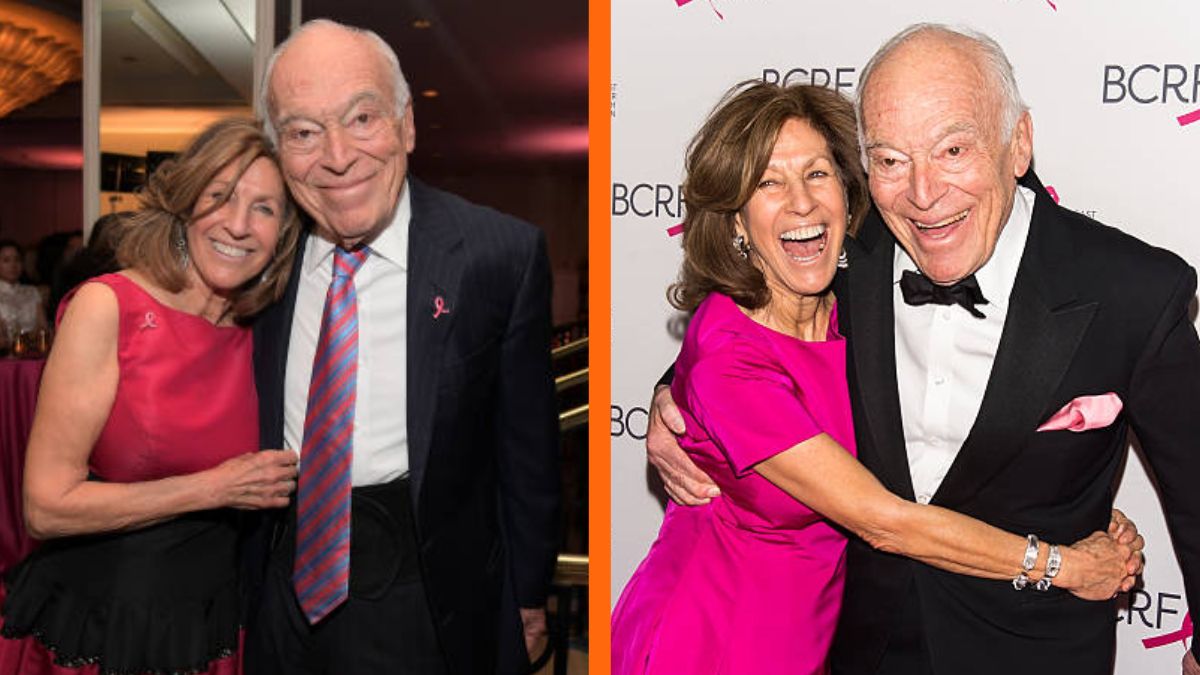
Judy Ellis Glickman is much more than the woman known publicly as Leonard A. Lauder’s wife. Professionally known as Judy Glickman Lauder, she is an accomplished American photographer, collector, humanitarian, and philanthropist whose work explores memory, courage, history, and loss. Her photographs of Holocaust sites and the Danish rescue of Jewish citizens during World War II have reached audiences around the world.
Her personal story is equally remarkable. She shared a 54-year marriage with real estate developer Albert B. Glickman before finding love again with Leonard A. Lauder, the businessman and art patron who helped transform the Estée Lauder Companies into a global enterprise. This article explores her childhood, career, family, interests, financial position, public image, and lasting cultural legacy.
Quick Facts About Judy Ellis Glickman
| Category | Details |
|---|---|
| Full name | Judith Ellis Glickman Lauder |
| Professional name | Judy Glickman Lauder |
| Birth year | 1938, according to the Portland Museum of Art |
| Age | Approximately 87 or 88 in 2026 |
| Raised in | Piedmont, California |
| Nationality | American |
| Profession | Photographer, collector, humanitarian, philanthropist |
| Father | Dr. Irving Bennett Ellis |
| First husband | Albert B. Glickman |
| Second husband | Leonard A. Lauder |
| Children | Four |
| Best known for | Holocaust photography and photography collecting |
| Major book | Beyond the Shadows |
| Major museum gift | More than 600 photographs promised to the Portland Museum of Art |
These details are supported by profiles from the Portland Museum of Art, the Metropolitan Museum of Art, Aperture, and family memorial records.
Who Is Judy Ellis Glickman?
Judy Ellis Glickman is an American photographer best known for images that examine the emotional presence of history. She began taking photography seriously during the 1970s and developed her skills through UCLA, the Maine Photographic Workshops, and the Portland School of Art.
She is particularly respected for photographing concentration camps, memorial spaces, and people connected with Denmark’s rescue of Jewish citizens during the Holocaust. Alongside her artistic practice, she assembled an important collection of twentieth-century and contemporary photography.
Earlier books and records often identify her as Judy Ellis Glickman, while museums now commonly use Judy Glickman Lauder. Both names refer to the same artist, collector, and philanthropist.
Early Life and Background
Judy Ellis Glickman was born in 1938 and raised in Piedmont, California. Photography surrounded her from childhood because her father, Dr. Irving Bennett Ellis, was both a physician and a notable California Pictorialist photographer. His work during the 1930s and 1940s introduced her to black-and-white photography at an early age.
Her father regularly photographed Judy while she was growing up, including a sequence of birthday portraits taken outside the family home. Those early experiences showed her that a camera could preserve time, emotion, and family history in ways that ordinary memories sometimes could not.
She later attended UCLA, where she met Albert B. Glickman. Her interest in photography continued as she built a family, and classes, workshops, exhibitions, museum visits, and darkroom practice gradually transformed that interest into a serious creative career.
Her Age and Physical Features
The Portland Museum of Art records her birth year as 1938. She is therefore approximately 87 or 88 years old in 2026, depending on whether her birthday has already occurred. Some Metropolitan Museum of Art records list 1939, which explains the one-year difference found in certain online profiles.
Reliable institutions have not published verified information about her height, weight, or body measurements. Websites offering precise physical statistics without credible documentation should not be treated as dependable sources.
Public portraits show a poised woman with a warm smile and an elegant, understated appearance. However, her importance comes from her artistic vision, historical work, and cultural contributions rather than her physical features.
Photography Career and Major Works
Judy Ellis Glickman began making photographs seriously during the 1970s. She became known for expressive black-and-white images, available light, strong contrast, and careful attention to spaces carrying emotional or historical meaning. She has also used infrared film to give some Holocaust-related images an unsettling, almost otherworldly quality.
Her most recognized long-term project documents places connected with Nazi persecution. She photographed concentration camps and other historical sites in Germany, Poland, and the former Czechoslovakia, using cells, walls, windows, shadows, and landscapes to suggest lives interrupted by violence.
One of her best-known photographs is Cell, Auschwitz, Poland, created in 1988. The image uses natural light and an apparently empty room to communicate absence, confinement, suffering, and memory without showing violence directly.
She also created Resistance and Rescue: Denmark’s Response to the Holocaust, an exhibition honoring Danish citizens who hid and transported Jewish neighbors to safety in Sweden. The project emphasizes the power of ordinary people to resist injustice, even when doing so places their own lives at risk.
Her 2018 book, Beyond the Shadows: The Holocaust and the Danish Exception, combines photographs of destruction with accounts of courage. The work contrasts the horror of the concentration camps with Denmark’s organized effort to save much of its Jewish population.
Her exhibitions have appeared at more than 200 institutions worldwide, while her photographs are represented in more than 300 public and private collections. These include major museums and organizations devoted to art, history, and Holocaust remembrance.
Relationship With Leonard A. Lauder
Judy Ellis Glickman and Leonard A. Lauder knew each other through long-standing family and social connections. Leonard was a friend of her first husband, Albert, and both families shared strong interests in art, museums, philanthropy, and public service.
Albert died in 2013 after 54 years of marriage to Judy. Leonard had also experienced the loss of his first wife, Evelyn Lauder, who died in 2011. Their shared understanding of grief, family responsibility, and long marriages helped create a bond based on friendship and mutual support.
The couple married on January 1, 2015. Their later-life relationship attracted public interest because it brought together two established art collectors and philanthropists who remained involved with museums, cultural organizations, medical research, and charitable initiatives.
Leonard A. Lauder died on June 14, 2025, at the age of 92. Judy survived him after approximately ten years of marriage, so current profiles should accurately describe her as Leonard A. Lauder’s widow.
Marriage and Family Life
Before marrying Leonard, Judy Ellis Glickman spent 54 years with Albert B. Glickman, a successful real estate developer, investor, and philanthropist. They met while she was studying at UCLA and built a close family life with strong connections to both California and Maine.
The couple had four children: Jeff, Tigraw, David, and Brenner. Family tributes published after Albert’s death also described a large extended family that included 18 grandchildren.
Leonard had two sons, William and Gary, from his marriage to Evelyn. Judy and Leonard did not have children together, but their marriage connected two established families with children, grandchildren, and great-grandchildren.
Despite her public career, Judy has generally handled family matters with discretion. Family, travel, art, charity, and cultural institutions remained important parts of her life without becoming constant subjects of publicity.
Social Media Presence
She does not appear to maintain the highly visible personal social media presence commonly associated with modern celebrities and online influencers. Her photography and public work are represented mainly through museums, publishers, galleries, interviews, exhibition announcements, and institutional video programs.
This limited personal profile suits an artist whose reputation was established through books, museum collections, lectures, and physical exhibitions rather than daily online posting.
Readers looking for reliable information should consult recognized museums, publishers, and cultural organizations. Accounts using similar names should not automatically be considered official unless they are clearly verified.
Personality and Interests
Judy Ellis Glickman is often presented as observant, energetic, warm, and deeply curious. These qualities can be seen in the subjects she photographs, including historical sites, portraits, travel scenes, reflections, streets, and ordinary human moments.
Photography is her main passion, but collecting is equally important. Her collection includes work by Dorothea Lange, Gordon Parks, Diane Arbus, Richard Avedon, Margaret Bourke-White, Sally Mann, James Van Der Zee, and other influential photographers.
She has explained that emotional connection guided her collecting choices more than fame or market reputation. She selected images that immediately spoke to her and reflected aspects of the human condition.
Themes such as family, work, injustice, dignity, identity, joy, suffering, and resilience appear throughout her collection. She is also strongly interested in humanitarian causes, museums, education, and making art available to the public.
Maine holds a particularly important place in her life. Her family’s connection with the state and her relationship with the Portland Museum of Art eventually helped produce one of the institution’s most transformative photography gifts.
Does Judy Ellis Glickman Have Children?
Yes, Judy Ellis Glickman has four children from her marriage to Albert B. Glickman. Their names are Jeff, Tigraw, David, and Brenner. She also has a large extended family that includes grandchildren.
She did not have children with Leonard A. Lauder. However, Leonard had two sons from his first marriage, making their later union part of a wider blended family.
Her life demonstrates that an artistic career does not always follow a straight or conventional path. She developed her photographic voice while raising children, traveling, studying, collecting, and supporting charitable organizations.
Net Worth and Income
No reliable public source has confirmed Judy Ellis Glickman’s personal net worth. Celebrity-focused websites may publish estimates, but such figures are difficult to verify and may incorrectly combine a spouse’s fortune, private trusts, jointly held assets, art values, and estate arrangements.
Her first husband achieved considerable success in commercial real estate, while Leonard A. Lauder was a billionaire businessman closely associated with the international expansion of the Estée Lauder Companies.
Judy also created professional value through her photography, books, exhibitions, collection, and institutional work. However, the value of Leonard’s estate should not automatically be presented as her personal fortune.
Promised museum gifts are also cultural contributions rather than ordinary income. The most accurate conclusion is that she is a financially prominent philanthropist, although her exact personal net worth remains private.
Public Image and Legacy
Judy Ellis Glickman is respected for using photography to preserve memory without turning human suffering into spectacle. Her Holocaust images encourage viewers to consider absence, loss, moral responsibility, and the consequences of remaining silent during injustice.
Her legacy as a collector is equally important. She promised more than 600 photographs to the Portland Museum of Art, significantly strengthening its holdings in Pictorialism, modernism, documentary photography, portraiture, fashion, landscapes, and street photography.
The museum celebrated the gift through Presence: The Photography Collection of Judy Glickman Lauder. The collection is expected to support exhibitions, research, education, and a broader understanding of photographic history for many years.
By moving important works from a private collection into a public institution, she created a lasting resource for students, scholars, artists, and museum visitors.
Future Plans
Judy Ellis Glickman has not announced detailed future plans publicly. Following Leonard A. Lauder’s death in 2025, she has understandable reasons to keep her personal life and schedule private.
Her established projects will nevertheless continue reaching audiences through museum exhibitions, books, archives, lectures, and educational programs. The Portland Museum of Art has described her collection as a foundation for future photography installations.
Future exhibitions or publications should be confirmed by the institutions involved. Even without a detailed public schedule, her influence will continue through the preservation, study, and interpretation of her photographs and collection.
Conclusion
Judy Ellis Glickman has built a life around photography, family, historical memory, and generosity. Although many readers first encounter her name through Leonard A. Lauder, her artistic and philanthropic accomplishments stand independently.
From a childhood spent around her father’s camera to internationally recognized Holocaust projects, she developed a visual language based on empathy and reflection. Her portraits connected with the Danish rescue added courage and hope to work otherwise marked by historical loss.
Her museum gift expanded that legacy further. By sharing hundreds of important photographs with the public, she transformed a personal collection into a cultural and educational resource.
Her story is therefore not simply about whom she married. It is about what she photographed, what she valued, and what she chose to preserve for future generations.
FAQs About Judy Ellis Glickman
Who is Judy Ellis Glickman?
She is an American photographer, photography collector, humanitarian, and philanthropist professionally known as Judy Glickman Lauder.
How old is she?
The Portland Museum of Art lists her birth year as 1938, making her approximately 87 or 88 in 2026.
Was she Leonard A. Lauder’s wife?
Yes. They married on January 1, 2015, and remained married until Leonard’s death on June 14, 2025.
Who was her first husband?
Her first husband was real estate developer and philanthropist Albert B. Glickman. Their marriage lasted 54 years.
Does she have children?
Yes. She has four children from her first marriage.
What is she famous for?
She is famous for Holocaust-related photography, her work on the Danish rescue, her photography collection, and her support for museums.
What books has she published?
Her notable publications include Upon Reflection, Both Sides of the Camera, Beyond the Shadows, and work associated with Presence.
What is her net worth?
Her exact personal net worth has not been reliably disclosed.
Is she active on social media?
She does not appear to maintain a prominent verified personal social media presence.
What is her lasting legacy?
Her legacy combines historically meaningful photography with public-minded collecting, museum philanthropy, and a commitment to preserving human memory.