

Introduction
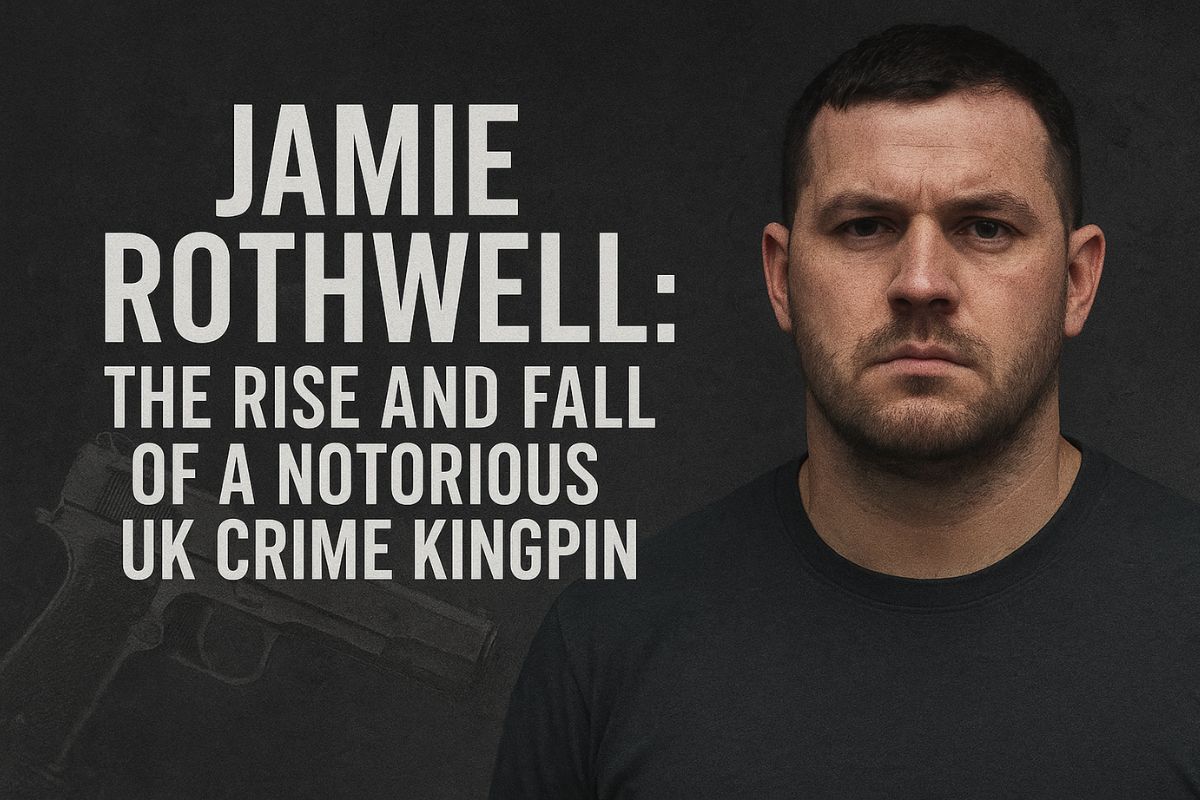
Jamie Rothwell is one of the most infamous organised crime figures in modern British history. Hailing from Salford, Greater Manchester, Rothwell rose to prominence through his involvement in large-scale drug trafficking, firearms offences, and violent conspiracies. His criminal empire, which operated across the UK and extended into Europe, drew intense scrutiny from law enforcement agencies. Ultimately, his capture and conviction marked a significant victory in the fight against organised crime. This article delves into the life, crimes, and legal downfall of Jamie Rothwell, exploring the broader implications of his criminal network.
Early Life and Background
Jamie Rothwell was born in the late 1980s in Salford, a city known for its industrial heritage and close-knit communities. Details about his childhood remain limited, but sources indicate that he grew up in an environment where crime and gang culture were prevalent. These surroundings, combined with a desire for power and financial gain, may have influenced his path toward organised crime.
From an early age, Rothwell demonstrated a willingness to take risks and assert control over his surroundings. By his twenties, he had become a central figure in local criminal circles, gradually expanding his influence beyond Salford.
Rise to Power
Establishing a Criminal Network
Rothwell’s ascent in the criminal world was marked by strategic alliances and ruthless enforcement. He built a sophisticated organisation involved in the trafficking of Class A drugs, including cocaine, and the distribution of high-powered firearms, such as AK-47 rifles. His operations were not limited to Salford; they extended across Greater Manchester and other parts of the UK.
Use of Technology
One of Rothwell’s key strategies was leveraging technology to coordinate his operations. He utilized encrypted messaging platforms, such as EncroChat, to communicate securely with associates. This allowed him to plan and execute criminal activities while maintaining a degree of anonymity. However, these tools ultimately became his undoing when law enforcement infiltrated the network, collecting crucial evidence that would later lead to his arrest.
Violence and Enforcement
Rothwell’s leadership style was notoriously violent. He used intimidation and threats to maintain loyalty within his gang and to control rivals. Court records reveal that his organisation orchestrated acts of violence, including assaults and attacks intended to protect their drug empire. This combination of fear and strategic planning cemented his position as a dominant figure in organised crime.
International Reach
Evading Justice
In an attempt to evade British authorities, Rothwell spent time abroad in countries such as Spain and the Netherlands. Despite his efforts, international cooperation between law enforcement agencies ensured that he remained a high-priority target. Extradition proceedings brought him back to the UK, where he faced the consequences of his criminal activities.
European Operations
Rothwell’s network did not operate in isolation. It relied on international contacts for the movement of drugs and firearms. His ability to coordinate cross-border operations highlights the complexity of modern organised crime and underscores the need for global cooperation among law enforcement agencies.
Investigation and Arrest
The Role of EncroChat
The breakthrough in Rothwell’s case came with the infiltration of EncroChat, an encrypted communication service widely used by criminals. Law enforcement agencies monitored his messages, uncovering detailed plans for drug trafficking, arms dealing, and acts of violence. This evidence formed the backbone of the prosecution’s case.
Arrest and Extradition
Following the surveillance operation, Rothwell was located and arrested in Spain. He had attempted to live under the radar, but coordinated international policing efforts ensured his capture. Subsequently, he was extradited to the UK to face trial, marking a critical step in dismantling his criminal network.
Trial and Conviction
Charges and Evidence
Jamie Rothwell faced multiple charges, including conspiracy to supply Class A drugs, conspiracy to possess firearms with intent to endanger life, and conspiracy to cause grievous bodily harm. Evidence presented during the trial included intercepted communications, witness testimony, and forensic data linking him to organised crime activities.
Sentencing
In August 2025, Rothwell was sentenced at Manchester Crown Court to 43 years in prison. The sentence reflected both the scale of his criminal enterprise and the severity of his actions. The court emphasized that his leadership facilitated a highly organised and dangerous network, causing significant harm to communities.
Impact on the Community
Rothwell’s criminal activities had far-reaching effects on the communities in which he operated. His gang’s involvement in drug trafficking contributed to addiction issues, violence, and social instability. Law enforcement officials have highlighted that dismantling his network has improved safety and reduced the availability of illegal drugs in affected areas.
Law Enforcement and Organised Crime
International Cooperation
The Rothwell case underscores the importance of international collaboration in combating organised crime. Agencies across Europe and the UK worked together to track, apprehend, and prosecute him, demonstrating how transnational efforts can effectively disrupt criminal networks.
Lessons Learned
Law enforcement has also gained valuable insights into how modern criminal organisations operate, particularly their use of encrypted communications and cross-border logistics. These lessons are now shaping strategies to prevent similar criminal activities in the future.
Media Coverage and Public Perception
Jamie Rothwell’s arrest and conviction attracted widespread media attention, both for the scale of his crimes and the dramatic nature of his capture abroad. Coverage often highlighted his attempts to evade justice, as well as the violent methods used to maintain control over his gang. Public interest in the case has reinforced awareness of the dangers posed by organised crime.
Conclusion
Jamie Rothwell’s story is a stark reminder of the challenges posed by organised crime in modern society. From his early rise in Salford to his international operations and eventual imprisonment, Rothwell’s criminal career illustrates both the dangers of unchecked ambition and the effectiveness of coordinated law enforcement. His conviction serves as a warning to other criminal figures and a testament to the dedication of police and judicial systems in tackling complex criminal enterprises.
By examining the life and crimes of Jamie Rothwell, we gain insight into the mechanisms of organised crime and the ongoing efforts to safeguard communities from its destructive impact.