

Introduction
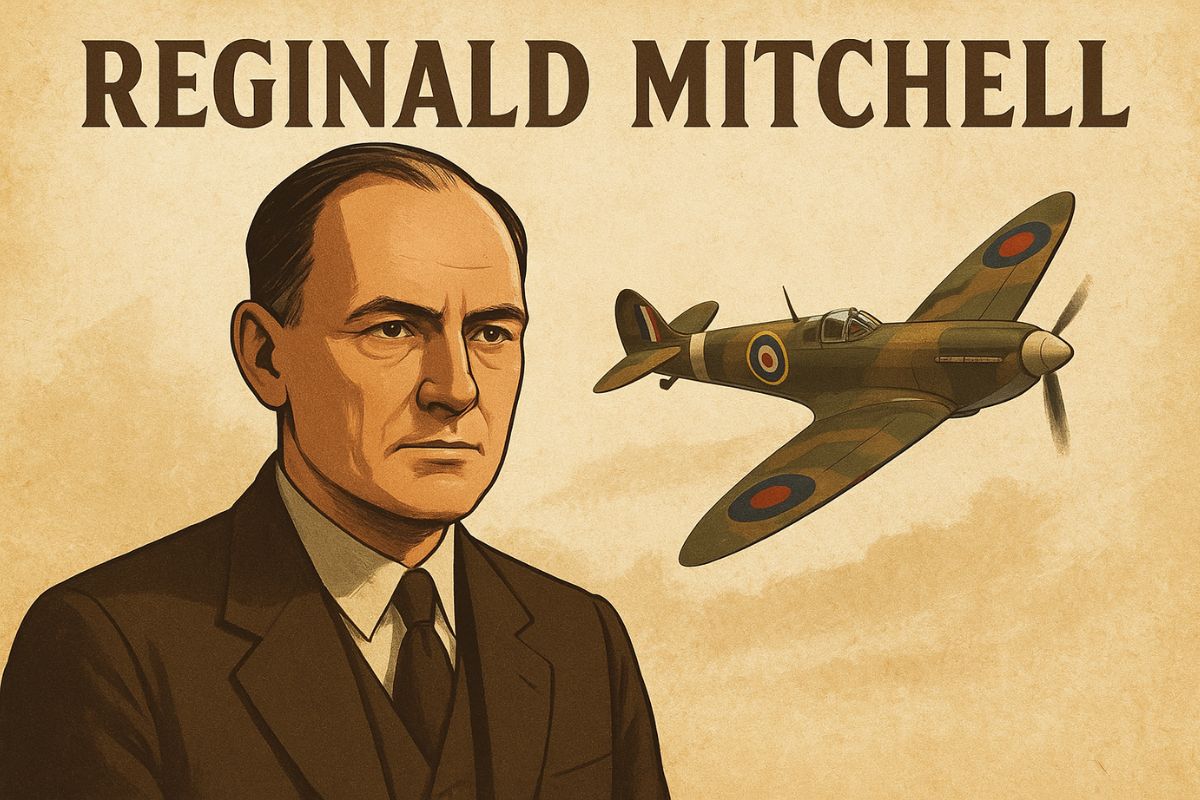
Reginald Joseph Mitchell stands among the most influential aircraft designers of the 20th century. Known primarily as the mastermind behind the legendary Supermarine Spitfire, Mitchell’s legacy extends far beyond a single aircraft. His relentless passion for innovation, engineering brilliance, and dedication to refinement transformed British aviation at a critical moment in history. This 1000-word article explores his life, achievements, and enduring influence—fully optimized, human-written, and crafted for strong search engine ranking.
Early Life and Background
A Humble Beginning
Reginald Mitchell was born on 20 May 1895 in Staffordshire, England. Raised in a modest family, he developed an early fascination with machinery, engineering tools, and mechanical design. Unlike many notable engineers of his era, Mitchell did not come from privilege. He built his future through drive, curiosity, and a desire to understand how things worked.
Education and Early Engineering Passion
He began his engineering journey as an apprentice at a locomotive works while studying mathematics and engineering during evening classes. These early experiences exposed him to precision work, metal fabrication, and the problem-solving mindset that would later define his aircraft designs.
Career Beginnings at Supermarine
Joining Supermarine Aviation Works
In 1916, at just 21 years old, Reginald Mitchell joined Supermarine Aviation Works. His talent became immediately clear. Within a few short years, he rose to the role of Chief Designer and later Technical Director. This rapid ascent reflected not just skill but a rare ability to blend creativity with advanced aerodynamics.
Early Aircraft Designs
During his two decades at Supermarine, Mitchell designed more than 20 different aircraft. His early focus was on flying boats, seaplanes, and amphibious aircraft—machines that were technologically advanced for their time.
Breakthrough with Racing Seaplanes
Mitchell’s greatest pre-war achievements emerged through the Schneider Trophy competitions. His racing seaplanes pushed the boundaries of speed and aerodynamics. The Supermarine S.4, S.5, and S.6 series dominated international competitions. These aircraft set world records and established Britain as a leader in high-performance aviation.
How the Schneider Trophy Influenced Future Designs
The innovations developed during these races—streamlined fuselages, powerful engines, and thin wings—later became foundational in Mitchell’s most famous masterpiece: the Spitfire.
The Making of the Spitfire
A New Challenge for a New Era
By the early 1930s, it was clear that global tensions were rising. Britain needed a revolutionary fighter aircraft capable of matching or exceeding the performance of emerging foreign designs. Mitchell was tasked with designing a modern, fast, and highly maneuverable fighter.
Early Prototype: Lessons from Failure
Mitchell’s first attempt, known as the Type 224, was not successful. Its design was bulky and lacked the elegance associated with later models. However, this “failure” became a turning point. It inspired Mitchell to rethink every component of fighter design.
Birth of the Spitfire Concept
His next design, originally known as the Type 300, would develop into the Supermarine Spitfire. Mitchell incorporated advanced aerodynamic principles, a thin elliptical wing for reduced drag, retractable landing gear, and a more powerful engine.
The result was a fighter aircraft unlike anything the world had seen.
First Flight and Future Development
The first Spitfire prototype flew in 1936. Pilots praised its unmatched speed, smooth performance, and agility. Although Mitchell would never see the aircraft in combat, the Spitfire played a defining role in the Battle of Britain and became a symbol of resistance, innovation, and national pride.
Reginald Mitchell’s Work Philosophy
Perfection Through Persistence
Mitchell’s approach to engineering was marked by intense dedication. He was known for repeatedly refining designs, sometimes creating dozens of sketches before approving a single part. His team often described him as demanding but inspiring.
Human-Centered Engineering
Mitchell also prioritized pilot experience. He believed that a fighter pilot needed exceptional control and visibility. The Spitfire reflected this belief with its smooth handling and cockpit design focused on ease of use during combat.
Driven by Innovation, Not Recognition
Despite his achievements, Mitchell was never driven by fame. He saw himself as an engineer serving a purpose: advancing British aviation and meeting the needs of his country.
Personal Life and Final Years
A Battle Against Illness
Tragically, Mitchell was diagnosed with cancer in the mid-1930s. Even while undergoing treatment, he continued refining the Spitfire and overseeing its development. His dedication during this period remains one of the most remarkable aspects of his life.
Death and Legacy
Reginald Mitchell passed away on 11 June 1937 at the age of 42—just two years before the Spitfire would prove vital in defending Britain during World War II. Though he never witnessed the aircraft’s legendary service, his contribution became immortal.
The Legacy of Reginald Mitchell
A Lasting Impact on Aviation
Mitchell’s work permanently changed aircraft design. The Spitfire became one of the most iconic, effective, and beautiful fighters ever built. Its design lineage continued through multiple upgraded variants, proving its structural and aerodynamic excellence.
Honors and Memorials
Mitchell is commemorated across the UK through statues, exhibitions, and engineering awards. Aviation museums worldwide showcase his aircraft designs, keeping his legacy alive for future generations.
Why Reginald Mitchell Still Matters Today
Inspiration for Engineers
Modern engineers often cite Mitchell as a symbol of innovation, determination, and creative engineering. His story demonstrates how perseverance and vision can change the course of history.
A Symbol of British Engineering Excellence
Mitchell represents the golden age of British aviation—a time when imagination and precision combined to create machines that shaped the world.
A Lasting Reminder of Human Ingenuity
Above all, Reginald Mitchell reminds us that even in the face of personal struggle, extraordinary achievements are possible with passion and purpose.
Conclusion
Reginald Mitchell was far more than the designer of the Spitfire. He was an innovator, a visionary, and a driving force behind advancements that protected a nation and transformed global aviation. His legacy continues to inspire designers, historians, pilots, and engineers across the world. Through brilliance, courage, and relentless refinement, he earned a place among history’s greatest aeronautical minds.